Timothy W. Cook
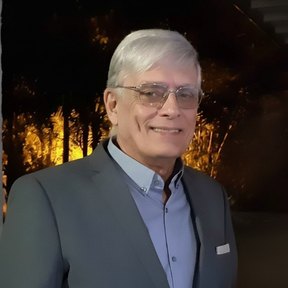
Founder and CEO
Timothy W. Cook
MSc Health Informatics, University of Central Lancashire. BSc Engineering Technology. US Marine Corps, retired Master Sergeant, communications engineering and information warfare.
- Twenty-five years developing semantic interoperability frameworks.
- Created the Multi-Level Health Information Model (MLHIM), then generalized it to S3Model and SDC.
- Collaborator with W3C, ISO, IHTSDO and ANSI on semantic data standards.
- Leads product development, architecture and standards engagement, and is the primary contact for partnerships.
After 20 years in military comms, I learned that if the message isn't clear, the mission fails. I built SDC so the message never degrades.
Luciana Tricai Cavalini, MD, PhD
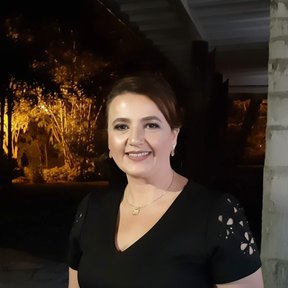
Co-founder and Chief Medical Officer
Luciana Tricai Cavalini, MD, PhD
Medical degree 1994, Master's in Public Health 1999, PhD in Collective Health 2005, post-doctorate at Karolinska Institutet 2008.
- Associate Professor, Fluminense Federal University (UFF), Niterói, Brazil.
- Family health physician in the SUS, and clinician at a child and adolescent CAPS.
- Key contributor to MLHIM and to its generalization into S3Model; co-author on multiple publications across both.
- Collaborating with Tim since the OSHCA conference in Kuala Lumpur in 2008.
Direct, current clinical practice inside Brazil's Sistema Único de Saúde is what keeps the language-agnostic claim honest: the models are exercised in Portuguese, in a live public health system, not translated afterwards.
Healthcare data should do more than document care. It should continuously generate knowledge. Properly structured clinical information can power real-time insights for both medicine and public health, and we are building SDC to make that possible at scale.
Dr. Nikki Shaw, BSc(Hons), PhD, FBCS
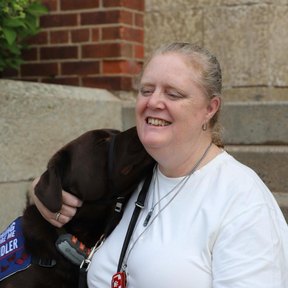
Co-founder and Chief Research Officer
Dr. Nikki Shaw, BSc(Hons), PhD, FBCS
Health informatics specialist and the first research chair in health informatics in Western Canada. Originally from England. Nikki is deaf and uses a service dog, and is very open to collaboration and partnerships.
- Full professor of biology (health sciences), Algoma University; Speaker of the Senate and a Governor on the Board.
- Tutor at NOSM University.
- Member of the International Joint Commission's Health Professionals Advisory Board.
- Research across health services research, disability studies, medical ethics and health informatics.
- Collaborating with Tim since the AMIA 2000 invited workshop on open source in healthcare; co-founded the PATH Group in Canada.
Twenty years across British Columbia, Alberta and Ontario brings the bilingual English/French case and the accessibility considerations that a language-agnostic model has to survive.
Research data is useless if it dies in a spreadsheet. I built SDC to ensure scientific knowledge outlives the grant cycle.
Strategic advisors
Not three separate résumés, but one continuous line of governance around the substrate. Policy requires it. Standards express it. Security certifies it.
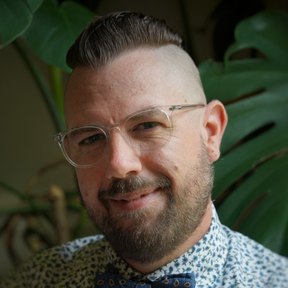
Policy, federal partnerships and standards
Christopher Steven Marcum, PhD
Former Assistant Director at the White House Office of Science and Technology Policy, and former Senior Statistician and Senior Scientist at OMB. Spearheaded the August 2022 OSTP public access memo and was principal author of OMB M-25-05, the OPEN Government Data Act implementation guidance. Senior Fellow in the Center for Data Policy at the Data Foundation.
Axius SDC operationalizes open-data mandates Dr. Marcum authored as federal policy.
This is probably the most clear documentation of a reference data model that I've ever seen.
Two-level modeling and openEHR
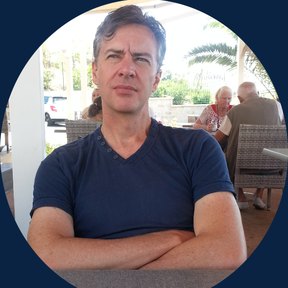
Thomas Beale
Creator and chief architect of the openEHR Archetype Definition Language and Archetype Object Model, both now recognized as formal ISO standards for clinical knowledge modeling. Lead of the openEHR specification program and primary author of its core reference models, governance frameworks and workflow specifications.
Technical advisor to large healthcare ecosystems including the US Department of Veterans Affairs, Intermountain Healthcare and national ministries of health, with three decades of software engineering behind it, from real-time control systems to HL7, CEN, IHTSDO and OMG.
US government, defense, security and GRC
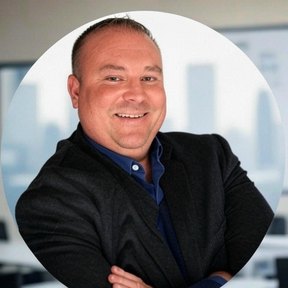
Timothy Allen Lee
Twenty years building defense-grade GRC programs and management systems, advising on controls across NIST 800-53, CMMC, the NIST AI RMF, ISO 27001 and 42001, HIPAA, HITRUST, SOC 2 and the EU AI Act. MA Executive Leadership; CISA, CISM, ISO 42001 / 27001 / 9001 Lead Auditor, DAWIA PM III. US Army and Kentucky Army National Guard, Captain, ten years.
Author of The Symphony of Defense, a three-movement, six-pillar, 42-step framework for governing AI agents in production. A career spanning DCMA, the Defense Logistics Agency, Raytheon, BAE Systems, Deloitte and Coalfire.
The Semantic Data Charter solves the substrate problem my audit chain governance layer sits on top of. That is architecture alignment.
Why this team matters
The composition is the argument, not a coincidence of hiring.
The founding team spans the United States, Canada and Brazil, which is what lets the language-agnostic claim be tested rather than asserted. A model authored in English, used clinically in Portuguese, and deployed in a bilingual English and French health system is a harder test than any internal review.
Each co-founder's collaboration with Tim is documented rather than described. Nikki and Tim have published together since 2002, beginning with a peer-reviewed paper in Informatics in Primary Care and a chapter in her 2005 book. Luciana is co-author on eight of Tim's ten peer-reviewed papers, 2011 to 2016, and on the JAMA letter. Every one has a resolvable publisher record, listed on his CV. Read the longer story →